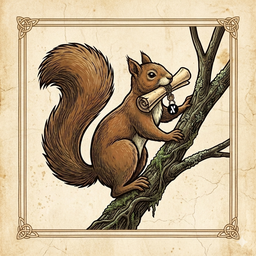
Every chapter before this one came down the trunk the same way. A squirrel ran it from the crown to the roots with word in his mouth, and what he carried was set down here in order. That is why the codex is chapters and not a manual: each one is a dispatch, and a reader is receiving them.
This last one carries no steps. It is the map of the tree itself: what the names stand for, which keeper watches over which part of the forest, and where the old stories come from.
The tree #
In the Norse poems, Yggdrasil is the world tree: an immense ash at the centre of everything, its branches over the heavens and its roots reaching down to the wells beneath the worlds. The realms hang from it. Creatures live along it.
Here, Yggdrasil is the ecosystem: the chains, the bridges between them and everything built on them, grown as one tree. EnchantedForestDeFi is the forest it grows in.
The messenger #
Ratatoskr is a squirrel who runs up and down the trunk of Yggdrasil, carrying words between the eagle perched at the crown and Níðhöggr, the serpent gnawing at the roots. The Poetic Edda names him in Grímnismál, and Snorri Sturluson's Prose Edda tells the same in Gylfaginning. In the old telling the words are spiteful ones, and he keeps the two at odds. That is almost the whole of what the sources say, which leaves room to say what he does now without contradicting them.
He is the only creature that travels the whole height of the tree. He carries word, not treasure. He is never at rest and never a warrior. He is not one of Odin's ravens, nor Sleipnir, nor any of the god's other beasts: he belongs to the tree.
The chain is named for him, and so is its coin, RATR. The wRATR mark shows him mid-run with a scroll in his mouth: the messenger, carrying the document.
Crown and root #
The eagle and the serpent are the chains he runs between. Níðhöggr, at the roots, is the RATR chain: the proof-of-work foundation the rest of the forest grows out of. The eagle, at the crown, is Alephium.
The bridges are the messenger's run. What crosses is word: a deposit on one chain is reported, and the other chain acts on the report. How that works, and what backs it, is Chapter VI.
Realms are chains #
The tree holds nine realms. One of them is Alfheim, Álfheimr in Old Norse, home of the light elves and one of the bright upper worlds. Say it beside Alephium and the echo is plain. The resemblance was noticed, not invented, and it holds the frame together: a chain the messenger reaches is a realm on the tree.
As the bridges reach further, each new chain is another realm hanging from the branches. The messenger's work does not change. Only where he runs does.
The keepers #
Some parts of the forest are watched over by figures from the old stories. Each stands for one system and only that one: the domains are narrow on purpose, so a name always means the same thing.
Draupnir, the drip #
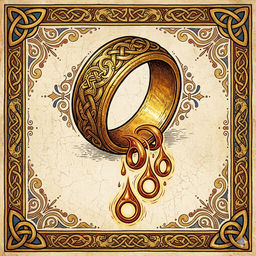
Draupnir is Odin's gold ring. Every ninth night, eight rings of equal weight drip from it. Nobody decides that they will. In the forest, Draupnir is the treasury's drip: the fixed share of every block that the chain itself sets aside (see Mining). It is consensus, not choice. Draupnir is the mechanism, not the one who tends what it gathers.
Idunn, the steward #
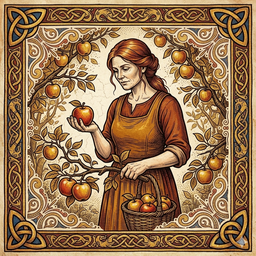
Idunn keeps the apples the gods eat to stay young. In the forest she is the steward of what the drip has gathered: the treasury's holdings, tended over many seasons. She knows which fruit to take now and which to leave to ripen. The pair tells the whole of it: the mechanism cannot choose, and the steward chooses what is harvested.
Freyja, wealth in motion #
Freyja, of the Vanir, is the patron of wealth set to work rather than kept: liquidity laid down in the pools, wRATR locked, votes that steer the flow. Her place is the harbour, and her portrait is in Chapter VII.
Heimdall, the watcher #
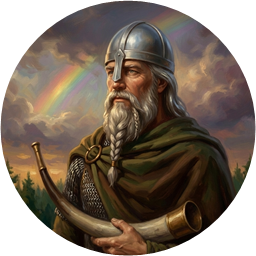
Heimdall is the gods' watchman. He guards Bifröst, the rainbow bridge, needs less sleep than a bird and hears the grass grow. In the forest he is the sentinel of the bridges between the chains.
Tomte, the helper #
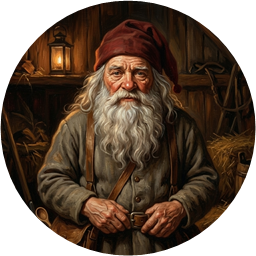
The tomte is a small household spirit who looks after a farm and the people on it. He comes from later Scandinavian folklore, not the Eddas (see below). In the forest he is the newcomer's helper: the first wallet, the first mine. Chapter I and Chapter III are his ground.
Forseti, the judge #
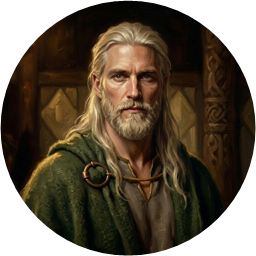
Forseti sits in Glitnir, a hall of gold and silver, and settles every dispute brought to him so that both sides leave reconciled. In the forest he is the judge: calm, rarely heard, and present only when order needs keeping.
Vár, the oath-keeper #
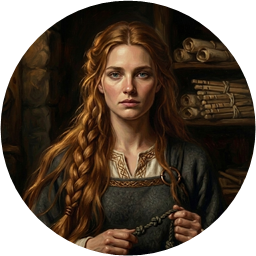
Snorri names Vár among the goddesses: she hears the oaths people swear to one another and holds to account those who break them. In the forest she is the witness of what was promised, so that what was promised can be measured against what was done. Forseti rules; Vár remembers.
Names in the codex #
- Nóatún: in the poems, the harbour of Njörðr, lord of ships and the sea's edge, and father of Freyja. The forest's harbour on Alephium is Chapter VII.
- Yggdrasil Roots: staking, down at the base of the tree. Chapter VIII.
- Mímir's Well: in the poems, the well of wisdom beneath one of the tree's roots. The forest's masternode report keeps the name. Chapter IV.
Myth and folklore: two layers #
Most of what anyone knows of Norse mythology was written down in Iceland in the thirteenth century, in the Poetic Edda and Snorri's Prose Edda, by Christian writers, two centuries after the old religion had left public life. Even these primary sources are reconstructions. Yggdrasil, Ratatoskr, Odin's ring, Idunn, Freyja, Heimdall, Forseti and Vár all come from this layer.
The tomte comes from a different one: later Scandinavian folk tradition, the household spirits of Swedish farms, known as nisse in Norway and Denmark, mostly recorded in the eighteenth and nineteenth centuries. The two share soil but are not the same thing, and the codex keeps them apart.
These names are used under creative license, as metaphor for what the systems do. No religious or scholarly authority is claimed, and the runes on these pages are ornament only. The full acknowledgment, the communities it is owed to, and how to raise a concern are on the sources page.
The sources, and the stories #
The frame rests on the Poetic Edda, chiefly Grímnismál, and on Snorri's Prose Edda, chiefly Gylfaginning and Skáldskaparmál. Both are old enough to belong to everyone. Henry Adams Bellows' translation of the Poetic Edda (1923) and Arthur Gilchrist Brodeur's of the Prose Edda (1916) are in the public domain in the United States and easy to find.
The stories of the forest are told on the lore site: the tree, the watch, the keepers in their own voices. They are kept in one place on purpose, so they are not retold here.
Carried down 2026-10-04. This is the last dispatch. The frame changes only when the forest does; the stories grow on the lore site.